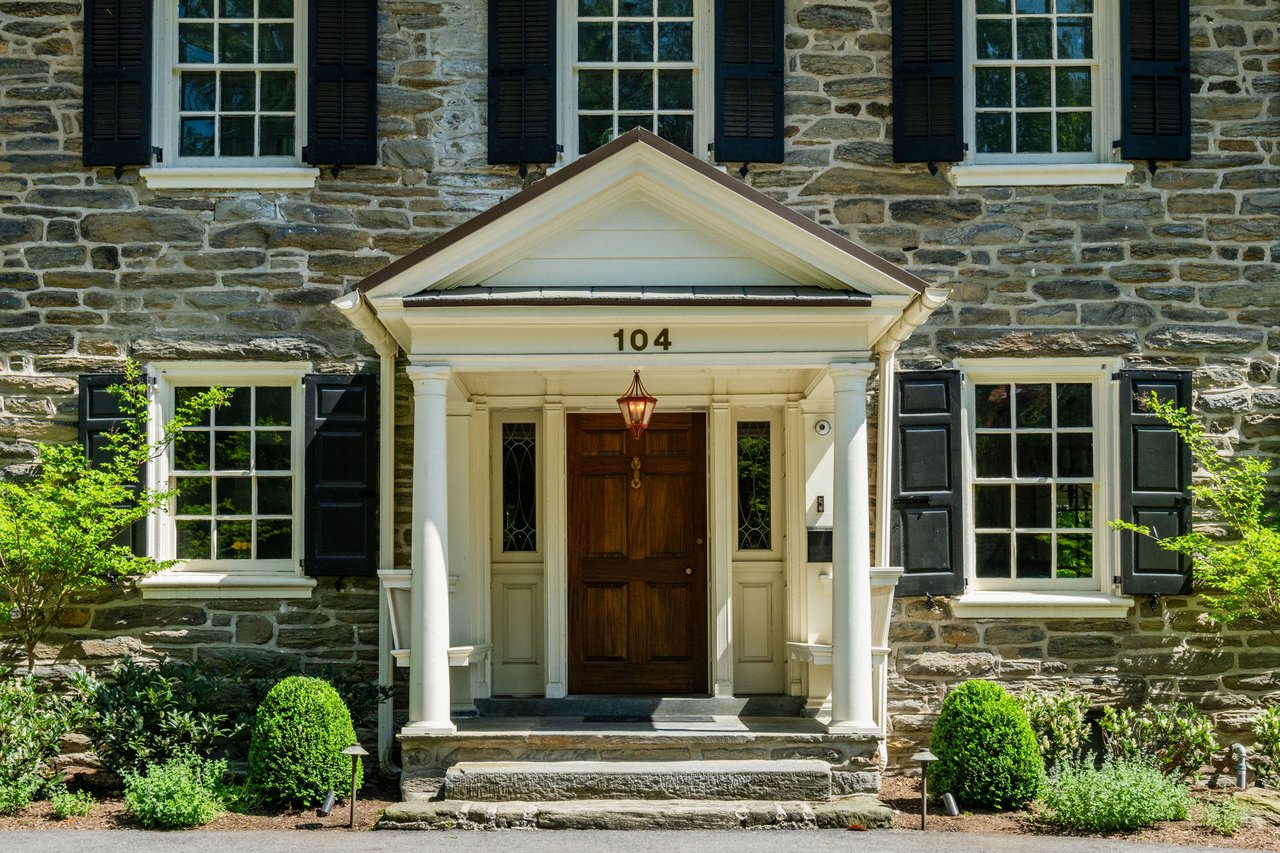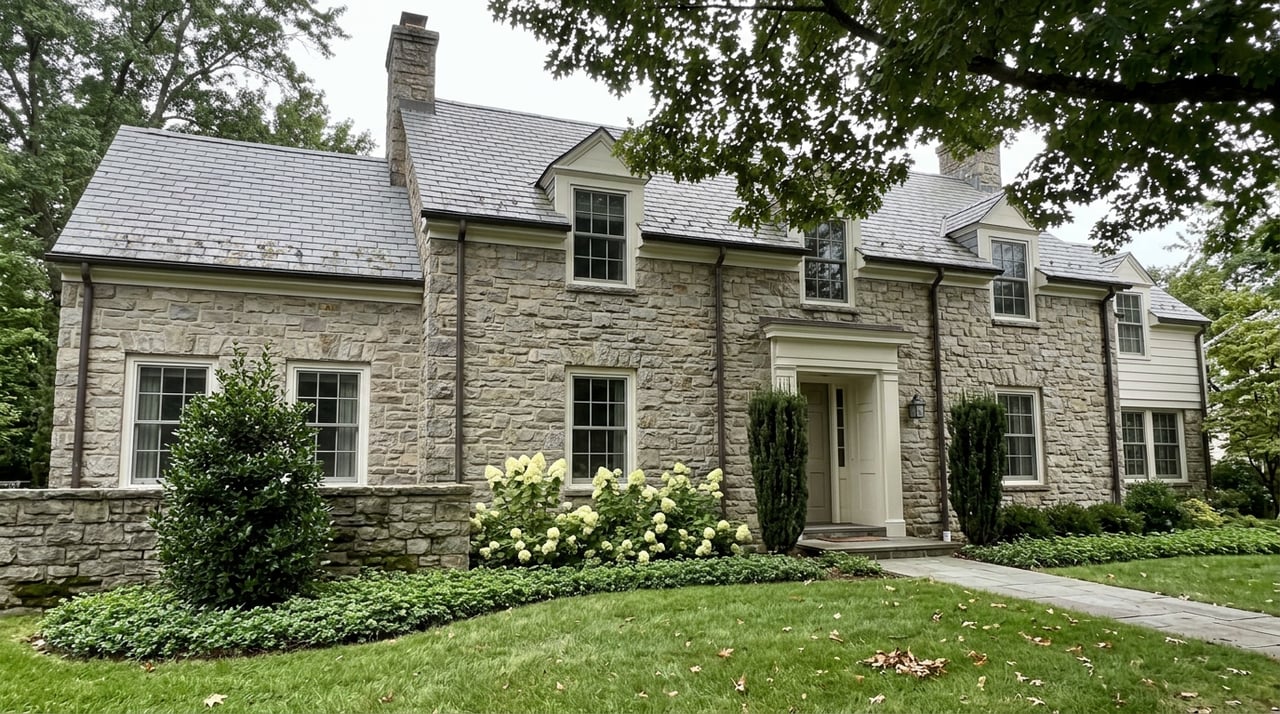
Set a search alert for zip code 19010 this month and you will get two kinds of email. One is a condo inside a converted 1960s apartment building, something like Radnor House or Mayflower Square, listed somewhere in the low six figures. The other is a stone estate with mature trees and a driveway long enough to lose a golf cart, listed at three to four million dollars. Same zip code. Same week. Same "Bryn Mawr" label on both listings.
This is not a fluke of one unusual town. It is how the entire Main Line works, and it is the reason the median price you saw on a portal last week tells you almost nothing about what you will actually pay for a specific address.
One Corridor, Marketed as a Single Brand
"The Main Line" gets sold as one thing: a corridor of old money and good schools stretching along the former Pennsylvania Railroad line, now SEPTA's Paoli/Thorndale route, from Ardmore out through Wayne. Commuters ride that line into Center City Philadelphia in twenty to thirty minutes, and the marketing treats every stop as interchangeable proof of the same prestige.
It isn't one market. Ardmore trades on walkability and Lower Merion School District access at a relative discount. Wayne charges a premium for its Lancaster Avenue storefronts and Radnor Township schools. Gladwyne and Villanova operate closer to estate-level pricing, pulling buyers who are comparing what their budget buys here against New York or Boston. Bryn Mawr sits in the middle of all of it, literally and figuratively, which is exactly why it is the clearest place to see the pattern break down.
The 19010 zip code that produces both the low-six-figure condo and the multi-million-dollar estate is not an outlier. It is Bryn Mawr behaving normally, because Bryn Mawr's zip code covers the row home blocks bordering Route 30, the legacy condo conversions near the train station, and the quieter estate streets north of Montgomery Avenue, all under one postal designation.
The Line Nobody Puts in the Listing
Ask an agent who actually works these towns where the real price break happens, and the answer is rarely the town line. It's Route 30.
In Haverford, in Bryn Mawr, and in Villanova, the pattern repeats: homes north of Route 30 carry a consistent premium over homes south of it. This shows up independently in each town, which is what makes it a mechanism rather than a coincidence. Villanova's version is less pronounced than Bryn Mawr's or Haverford's, but the direction is the same. Wider lots, older tree cover, and distance from the commercial strip sit on one side of a two-lane road, and the pricing follows the geography rather than the town name on the listing sheet.
Route 30 also carries the area's row home stock, the version of Main Line housing that never makes it into the glossy estate photography. In Bryn Mawr, blocks of row homes two to three stories tall, roughly 1,200 to 1,800 square feet, run the length of the corridor bordering Route 30. They are a real, livable, and considerably more affordable way to own on the Main Line, and they sit a few blocks from homes worth ten times as much.
School District Lines Don't Follow Town Names Either
The second border problem is the one that actually changes a family's math: school district boundaries do not track municipal boundaries the way most buyers assume.
Radnor Township School District was ranked the number one school district in Pennsylvania in the 2026 Niche rankings. Lower Merion School District ranked sixth statewide and sits in the top three among Philadelphia suburbs. Those two districts anchor a huge share of Main Line home values, because buyers pay for the boundary, not the town.
The problem is that a town's commonly used name and its actual school district assignment can diverge within a few blocks. A buyer who searches "homes in Wayne" or "homes in Villanova" and assumes every result carries the same district access is making a decision on the wrong unit of geography. The address matters more than the town name on the listing. This is the kind of detail that only shows up when someone has actually walked a client through a contract contingent on district verification, not when someone is reading a metro-level trend report.
What the Numbers Actually Show When You Break Them Apart
Here is where the aggregate numbers and the ground-level reality start to disagree in useful ways.
Across the broader Central Main Line corridor, which includes Wynnewood, Ardmore, Haverford, Bryn Mawr, Villanova, and Wayne, median home prices in 2026 have generally sat in the $650,000 to $685,000 range, with condo and carriage home HOA fees adding anywhere from $150 to $700 a month on top of the mortgage. That is a reasonable planning number for a mid-tier Main Line purchase.
But zoom into a single town and the number moves fast. Bryn Mawr's average home value stood at $923,783 as of the end of May 2026, up 5.1 percent over the prior year. The premium core towns of Gladwyne, Villanova, and Bryn Mawr regularly produce estate listings in the $3 million to $4 million range, a bracket that behaves differently from the rest of the market and typically requires specialized financing. Meanwhile, the region's overall median sale price across the full Main Line, as tracked through January 2026, was $743,000, up 3.0 percent year over year, with price per square foot climbing 23.2 percent to a median of $356. Sales volume actually softened slightly, 192 homes sold that January compared with 212 the year before, which tells you the price gains are coming from scarcity and buyer willingness to pay for finished, move-in-ready space rather than from a flood of new demand.
Supply is where the squeeze shows up most clearly. Radnor Township, home to that number-one-ranked school district, showed just 1.9 months of supply in late spring 2026, with an average sale-to-list ratio around 105.5 percent across a sample of only 47 active listings. That is not a market where a buyer gets to sit with a decision for a week. A property matching a specific criteria list in Radnor gets multiple offers fast, and the school district ranking is a direct input into why.
New construction follows its own logic entirely. Because Main Line towns have almost no vacant land left to build on, new builds in prime pockets like Villanova or Wayne carry median listing prices that frequently exceed $1.5 million, climbing well past $3 million for fully custom estates. Most of what gets called "new construction" here is actually infill: a builder buys an older home on a desirable lot, tears it down, and builds one new house in its place, so the buyer ends up with a brand-new structure inside a decades-old, tree-lined street grid rather than a subdivision.
The Alternative Nobody Markets as Loudly
Not every Main Line buyer wants three acres and a fieldstone facade. For buyers who want the train access and the name recognition without the maintenance of a full estate, the market has quietly built an alternative: luxury twin homes and townhomes positioned within walking distance of a station, such as the Strafford Walk development near Wayne, aimed at professionals and empty nesters who want a lock-and-leave lifestyle without giving up proximity to Lancaster Avenue's shops and restaurants. A few minutes further west along the same rail line, towns like Malvern offer a different value proposition again, at a lower entry point than the core corridor.
The point is not that any one of these options is better. It is that "the Main Line" as a search term flattens all of them into a single number, when the actual decision a buyer is making is between a dozen distinct micro-markets that happen to share a train line.
What This Means If You're Actually Comparing Towns
The median price you see for "the Main Line" is real, but it is an average of markets that do not behave the same way. Before you compare two towns, or two blocks in the same town, it is worth checking three things a portal search will not surface on its own: which side of Route 30 the property sits on, which specific school district the parcel is zoned into, and whether the town's price data you're looking at reflects a single-family home, a condo conversion, or a new infill build, because those three categories can differ by a factor of ten within the same zip code.
Frequently Asked Questions
Does buying in a Main Line town guarantee access to that town's most commonly cited school district? Not automatically. School district boundaries can cut across town lines, so the same municipality can feed more than one district depending on the specific street. Verifying district assignment for an exact address, not just the town name, is a necessary step before assuming access to a specific school district.
Is the Main Line a fast-moving market or a slow one right now? It depends on the segment. Overall Main Line sales volume has softened slightly year over year as of early 2026, but supply-constrained pockets like Radnor Township were moving with less than two months of inventory and sale prices above asking in the same period. Both things are true at once, which is why a single "hot or cold" label doesn't fit the whole corridor.
Where does new construction actually exist on the Main Line? Mostly as infill, meaning a builder replaces one older home with a new single custom home on the same lot, concentrated in towns like Bryn Mawr and Radnor. Larger-scale new development is more common further west, in towns like Malvern, where more land is available to build on.
If you're trying to figure out which side of a specific street, which school district line, or which price bracket actually fits your search, that's the conversation worth having before you fall for a median. Michael Prince has spent years working these blocks and can tell you what a listing's zip code isn't telling you. List with Michael.