Thinking about buying a historic home in Old City or Society Hill? It can be an exciting move, but it also comes with questions that newer homes usually do not. If you understand what is protected, what to inspect, and what records to request before you buy, you can move forward with a lot more confidence. Let’s dive in.
Why "historic" means more here
In Old City and Society Hill, “historic” is not just a style label. These neighborhoods have city historic district materials through the Philadelphia Historical Commission, which signals that they are locally regulated historic districts with district-specific guidance for property owners.
That matters because you are not only buying a home with character. You may also be buying a property that is subject to review for certain exterior changes if it appears on the Philadelphia Register of Historic Places. Before you fall in love with a facade or start planning updates, it helps to understand exactly what the city regulates.
What buyers are really purchasing
One of the biggest mistakes buyers make is assuming every property on the same block is treated the same way. Philadelphia Historical Commission rules distinguish between contributing and non-contributing resources, which means the exact parcel matters, not just the neighborhood name.
In practical terms, you want to know whether the specific property is individually designated, contributing, or non-contributing before making assumptions about future work. That status can affect how changes are reviewed and what details the city is likely to focus on.
Historic review is often about exteriors
For most properties on the Philadelphia Register, Historical Commission approval is required for changes. Most reviews involve exterior work, and the city notes that it only has jurisdiction over interiors if those interiors are separately listed.
That is an important distinction for buyers. You may have more flexibility inside the home than outside, but you should never assume that visible exterior work is simple in a historic district.
Many applications are handled by staff
Historic review sounds intimidating to some buyers, but the process is often more manageable than expected. According to the city, staff approve more than 90% of permit applications without referral to the full commission.
That does not mean every project is easy. It does mean that routine, well-documented work with an appropriate scope may move more smoothly than buyers expect.
What Old City homes often look like
Old City includes architecture spanning virtually all of Philadelphia’s 300 years of history. The district manual notes that common building types include rowhouses and 19th-century industrial loft buildings.
On rowhouse streets, homes are often two to three stories with pitched roofs and dormers. Loft buildings are commonly five to six stories, which gives Old City its distinctive mix of residential scale and former industrial character.
New work must fit the context
In Old City, the city’s guidance says new work should take cues from surrounding context while remaining compatible in size, scale, color, material, and character. That tells you a lot about how exterior changes are viewed.
If you are considering additions, roof deck elements, new windows, or facade updates, compatibility matters. Buyers should factor that into both renovation plans and budgets.
What Society Hill homes often look like
Society Hill has a different visual language. The district inventory highlights red-brick Georgian and Federal houses, multi-light sash windows such as 9/9 and 6/6, shutters, stringcourses, gable roofs, and masonry-heavy facades.
The streetscape is part of the appeal too. Some streets still retain brick sidewalks and granite curbs, which reinforces that the setting around the home can be as historically important as the house itself.
Small details carry real value
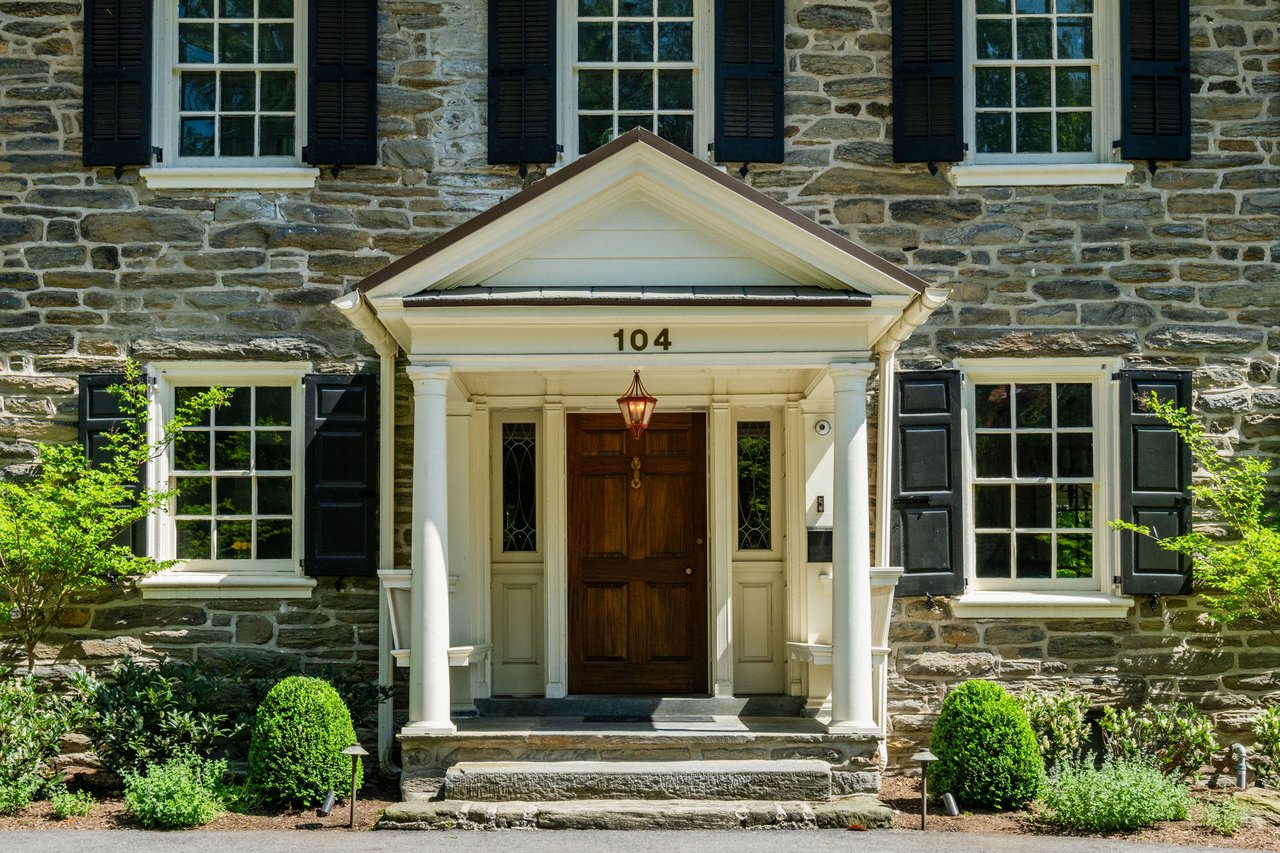
In both neighborhoods, a lot of value is tied to details that can seem easy to overlook at first. Brick and stone facades, windows, cornices, stoops, door surrounds, dormers, and rooflines often shape the home’s historic character.
Those same details are also common focus points in preservation review. If you are comparing two homes, one with better-preserved original features may offer a very different ownership experience than one with altered or questionable exterior work.
What parts of the home are usually regulated
Buyers often ask whether only the front facade matters. In Philadelphia, the review scope can be broader than many people expect.
The city says project review can cover windows, storm windows, doors, shutters, stoops, railings, fences, walls, sidewalks, driveways, facades, cornices, roofing and flashing, storefront features, signage, mechanical penetrations, masonry cleaning and repointing, and other changes that affect exterior appearance.
What is usually routine maintenance
Not every repair triggers review. Standard maintenance such as scraping and painting wood trim, cleaning gutters, and replacing clear window glass is generally not reviewable.
That is helpful if you plan to maintain a property without changing its appearance. Still, if your work goes beyond straightforward upkeep, it is smart to verify the scope before you finalize costs or timing.
Inspection issues to watch closely
Historic homes can be wonderful to own, but they reward careful due diligence. In Old City and Society Hill, many homes are older masonry rowhomes or townhouses, which means certain issues deserve extra attention during inspections.
A general inspection is a starting point. For a historic property, you also want an inspector who understands how older materials perform and where expensive surprises tend to hide.
Moisture and roof condition
Moisture is one of the biggest risks in older buildings. The National Park Service identifies uncontrolled moisture as a common cause of deterioration, often linked to roof condition, runoff, ground moisture, and ventilation.
A weather-tight roof is essential. When roofs fail, deterioration can spread quickly into masonry, wood, plaster, and paint, turning a manageable repair into a much larger project.
Masonry and repointing
Masonry deserves close review in these neighborhoods. Improper maintenance or abrasive cleaning can damage historic masonry, and repointing should match the original mortar in strength, composition, color, texture, and joint profile.
For buyers, that means asking whether past repointing used compatible mortar. Hard Portland-cement mixes can trap moisture or damage older brick, which is a major red flag in a pre-purchase review.
Windows and repair history
Historic windows are another major item. Preservation guidance generally favors repair over replacement, and if replacement is unavoidable, the new feature should match the old in design, color, texture, and where possible, materials.
You should ask whether windows were repaired, replaced, or altered with approval where needed. It is also worth knowing that weatherstripping and storm windows can improve performance without losing the historic window.
Lead paint rules buyers should know
If a home was built before 1978, lead-based paint rules matter. Sellers must disclose known lead-based paint information before the sale of most pre-1978 housing.
If you plan paid renovation work that disturbs painted surfaces in a pre-1978 home, that work must be done by certified lead-safe contractors. Buyers should make sure the seller provided the required disclosure package and should plan future work accordingly.
The smartest due diligence questions to ask
The best question is usually not, “Is this house historic?” The better question is, “What exactly has been approved here before?”
Philadelphia maintains Historical Commission building-permit logs, and the city encourages owners to contact staff early during planning. Reviews can be handled electronically through eCLIPSE or in person with photos, drawings, and other documentation, and the city says reviews are free.
Your pre-offer checklist
Before you bid on a historic home in Old City or Society Hill, try to confirm the following:
- Whether the specific parcel is individually designated, contributing, or non-contributing
- The district manual and available permit history for the property
- Whether visible changes such as replaced windows, repointed masonry, roof patches, additions, or altered stoops and railings were properly documented
- Whether the seller provided lead disclosure materials for a pre-1978 home
- Whether your planned exterior changes are likely to trigger Philadelphia Historical Commission review
What to tell your inspector
It helps to give your inspector a more targeted list than usual. Ask them to focus on:
- Roof leaks and drainage patterns
- Parapets and cornices
- Masonry condition and repointing quality
- Window operability and condition
- Evidence of past sandblasting
- Signs of moisture damage inside or outside the home
That kind of focus can help you catch issues that are especially important in older Philadelphia rowhomes.
Which upgrades are easier and harder
Some updates are usually more straightforward than others. Routine maintenance is typically the easiest category because it often does not trigger historic review.
The harder category includes work more likely to affect exterior appearance. Window replacement, masonry changes, roofing changes, additions, and site work are much more likely to require careful review.
Budget time into your plan
If you are buying with renovation in mind, build extra time into your process. Historic district review is not necessarily a deal breaker, but it can affect pricing, scheduling, and contractor scope.
The city specifically advises owners to contact Historical Commission staff during the planning stage so staff can explain the process and suggest preservation techniques. That is one of the best ways to avoid expensive mistakes after closing.
Why local guidance matters when you buy
Historic homes in Old City and Society Hill can be incredibly rewarding, but they are not a buy-first, figure-it-out-later kind of property. The right approach is to understand the parcel, review the paper trail, inspect the building with historic materials in mind, and get clear on your renovation goals before you commit.
If you do that work up front, you can enjoy the architecture, location, and long-term appeal of these Philadelphia homes without getting blindsided by preventable issues. And if you want a sounding board while comparing properties, permit histories, or renovation questions in the Historic District, Michael Prince can help you approach the process with a local, practical game plan.
FAQs
What does historic designation mean for a home in Old City or Society Hill?
- It can mean exterior changes require approval from the Philadelphia Historical Commission if the property appears on the Philadelphia Register of Historic Places, and the exact rules can vary depending on whether the parcel is individually designated, contributing, or non-contributing.
What exterior features can be reviewed on a historic Philadelphia home?
- Philadelphia says review can cover windows, doors, shutters, stoops, railings, fences, walls, sidewalks, driveways, facades, cornices, roofing, flashing, mechanical penetrations, masonry cleaning and repointing, and other exterior appearance changes.
What records should buyers request for a historic home in Philadelphia?
- Buyers should ask for prior permits, any Philadelphia Historical Commission approvals tied to visible exterior work, the property’s permit history, and lead disclosure forms if the home was built before 1978.
What should an inspector check on a Society Hill or Old City rowhome?
- Ask the inspector to focus on roof leaks, drainage, parapets, cornices, masonry condition, repointing quality, window operability, signs of abrasive cleaning, and evidence of ongoing or past moisture damage.
Are window replacements harder than basic maintenance in a historic district?
- Yes. Routine maintenance such as cleaning gutters, painting wood trim, or replacing clear window glass is generally more straightforward, while window replacement and other visible exterior changes are more likely to need review.
How can buyers avoid expensive mistakes with historic homes in Philadelphia?
- Use a historic-home-savvy inspector, confirm the parcel’s historic status, review permit history before you bid, make sure pre-1978 lead disclosures were provided, and involve Historical Commission staff early if you expect exterior work after closing.